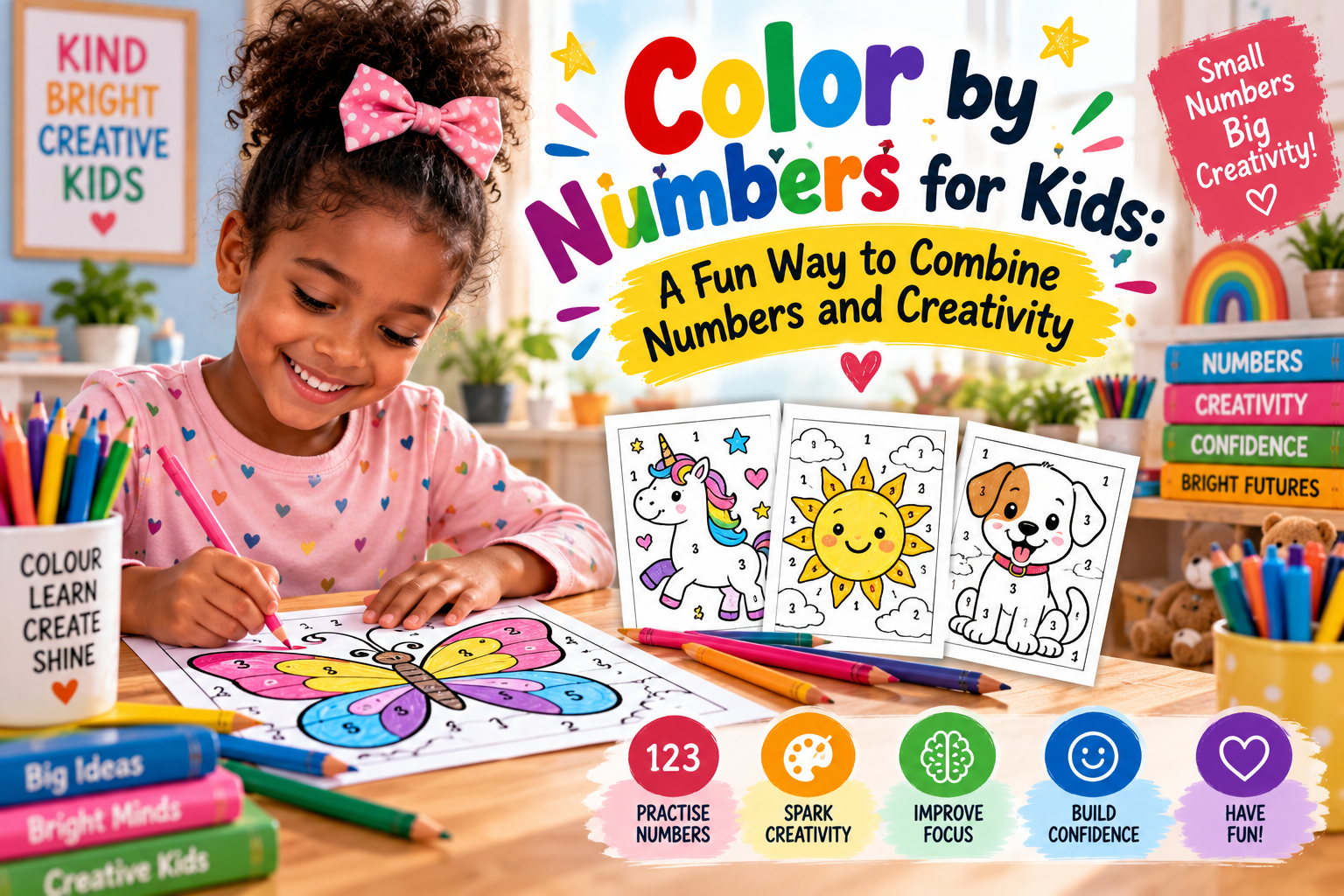
Give a child a regular coloring page and they immediately face a creative decision: Which color should I use?
Give them a color-by-number page and the experience changes. Now there is a little puzzle hiding inside the picture. Each number points to a color, each colored section reveals another piece of the illustration, and slowly the mystery image comes to life.
That simple combination is what makes color by numbers for kids so appealing. Children still get the fun of crayons, pencils and colorful pictures, but they also have numbers to recognize, colors to match and instructions to follow.
It is coloring with a small mission attached.
For parents looking for a quiet, screen-free activity that combines creativity with early number practice, color by numbers can be an excellent addition to the activity cupboard.
From the bookshelf
Recommended books
Continue the fun with one of these activity books.
Color and Create
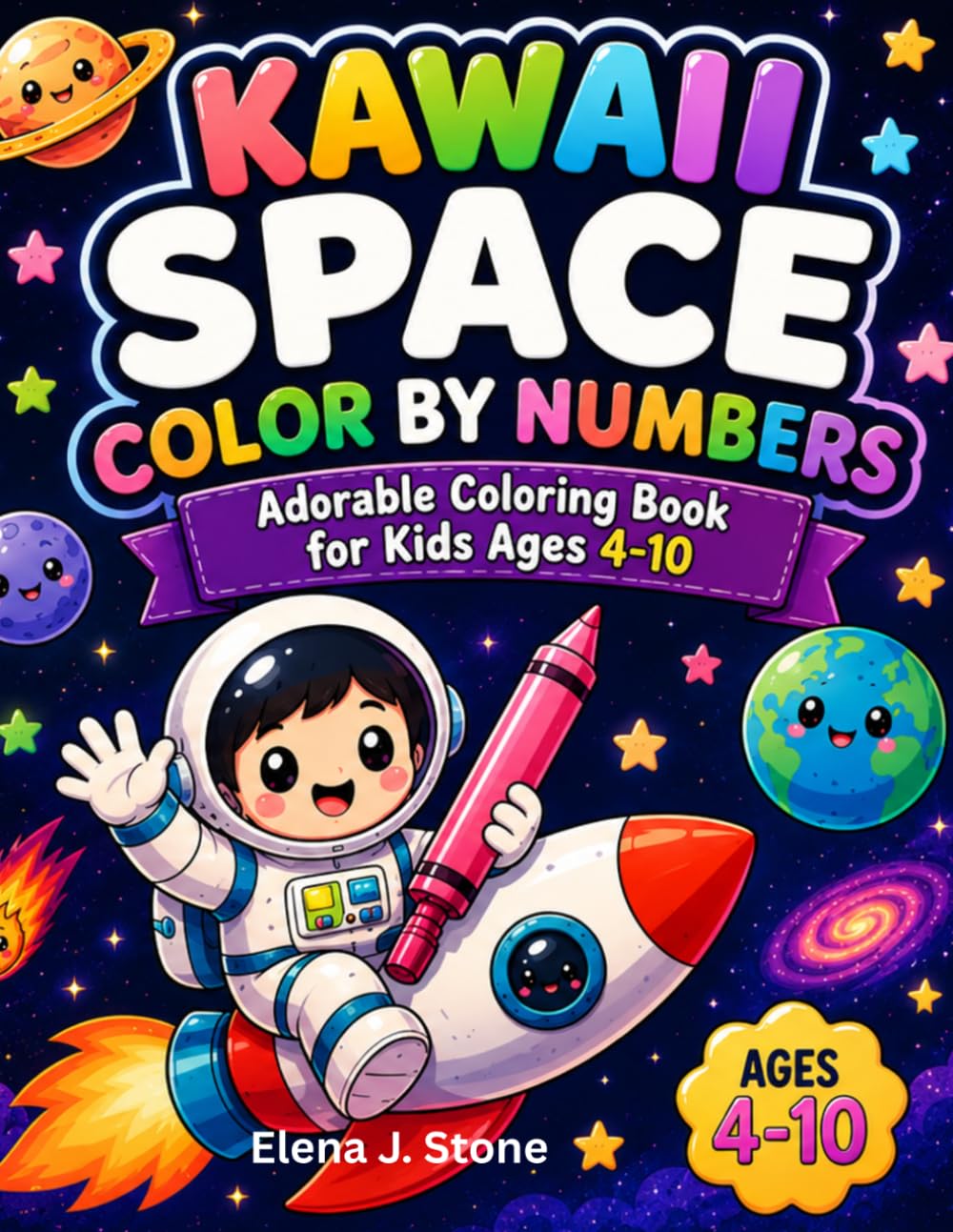
Kawaii Space Color by Numbers
As an Amazon Associate, Little Fun Lab may earn from qualifying purchases.
What Is Color by Numbers?
Color by numbers—also called color-by-number—is a coloring activity in which different parts of a picture contain numbers. Each number corresponds to a particular color shown in a key.
A simple activity might use:
1 = Blue | 2 = Yellow | 3 = Green | 4 = Purple
If a child finds the number 3 inside a section, they check the key, discover that 3 means green and color that area green. They repeat the process until all the numbered sections have been completed.
At first, the page may look like a collection of empty shapes and numbers. As more spaces are colored, the final picture becomes clearer.
Find. Match. Color. Reveal.
That little transformation gives color-by-number activities much of their appeal.
Why Do Kids Enjoy Color-by-Number Activities?
Part of the fun comes from knowing what to do while not necessarily knowing exactly how the finished picture will look.
A traditional coloring page offers complete freedom. A color-by-number page provides a simple set of rules.
For some children, that structure makes getting started easier. Instead of staring at a rocket and wondering whether it should be red, blue, yellow or green, they can simply find the number and follow the key.
There is also a natural sense of progress. Every completed section brings the child closer to revealing the full picture.
A few colored spaces become a shape. The shape becomes a character. Before long, the mysterious collection of numbers has transformed into a dinosaur, animal, monster truck, rocket or something equally exciting.
Color by Numbers Can Make Number Practice More Playful
Young children often encounter numbers through counting exercises, flashcards and worksheets. Color-by-number activities provide another way to interact with them.
Suppose a page uses numbers 1 through 5. A child repeatedly sees those numbers while deciding which color belongs in each space.
They aren’t simply being asked:
“What number is this?”
Instead, recognizing the number helps them accomplish something they already want to do—finish the picture.
That gives the number a purpose within the activity.
For children who are still learning their numerals, parents can help without taking over. Point to the key, compare the shapes of the numbers and encourage the child to find another matching number somewhere on the page.
Soon the activity can turn into a miniature number hunt.
“Can you find another 4?”
The coloring page suddenly has a touch of I-Spy built into it.
Matching Numbers With Colors
Color by numbers isn’t only about recognizing a number. Children also have to connect that number with another piece of information.
They see 2, check the key, discover that 2 means yellow, find the yellow crayon and then color the correct space.
That is a small sequence of decisions:
Number → Key → Color → Picture
Repeating the sequence encourages children to pay attention to the instructions and keep track of what each symbol means.
You can make this easier for beginners by keeping the color key visible at the top or bottom of the page and starting with only a few numbers.
A page containing four large numbered sections is much more approachable for a beginner than one containing twelve colors and dozens of tiny spaces.
There’s Still Plenty of Room for Creativity
It might seem that color by numbers removes creativity because the page tells children which colors to use.
It doesn’t have to.
Think of it as a different type of coloring experience.
With free coloring, the child decides what colors everything should be. With color by numbers, the challenge is to decode and complete the picture.
Children can enjoy both.
Once the numbered picture is complete, creativity can return in other ways. Ask your child to add a background, draw something beside the character or invent a story about what is happening.
A completed rocket could get an entire alien planet behind it. A dinosaur might need a volcano. A monster truck could use a gigantic mud ramp.
The numbered part can be only the beginning.
Choosing the Right Color-by-Number Page
Not every color-by-number page is suitable for every child.
For beginners, look for pictures with large coloring spaces, clear numbers, thick outlines and a short color key. Four or five colors may be plenty for a child’s first few pages.
As children become more comfortable with the format, the pictures can gradually become more detailed. Smaller sections, additional colors and more complicated illustrations create a greater challenge.
A simple progression might look like this:
| Level | What to Look For |
|---|---|
| Beginner | 3–4 colors, very large spaces, simple picture |
| Growing Confidence | 5–6 colors, medium-sized sections |
| Ready for More | More colors, smaller areas, detailed scenes |
The theme matters too.
A child who loves dinosaurs may be far more motivated to complete a numbered T-Rex than a random bowl of fruit. Another child might prefer cute animals, mermaids, vehicles or outer space.
Difficulty matters, but interest matters just as much.
How to Introduce Color by Numbers to a Beginner
Don’t hand over a complicated page and assume the instructions are obvious.
For the first activity, spend a minute exploring the page together. Show your child the color key and explain that every number has a matching color.
Then choose one number.
For example:
“Number 1 is blue. Let’s find all the number 1 spaces.”
You can point out the first one and allow your child to find another. Once they understand the idea, let them continue more independently.
If they accidentally use the wrong color, it doesn’t need to become a major event. You can simply check the key together and continue.
A blue section that was “supposed” to be purple will not cause the coloring police to arrive.
The objective is for children to understand the activity and enjoy completing it—not to create a flawless page.
Try the Number Hunt Method
Some children find it easier to work through one number at a time instead of jumping randomly around the page.
Suppose the key contains numbers 1 to 5.
Start by finding every 1 and coloring those spaces. Then put that crayon aside and search for every 2. Continue until the picture is complete.
This approach reduces the amount of switching between colors and turns each stage into a small search-and-find challenge.
For a more independent child, reverse the game. Ask them to choose which number they want to hunt for next.
There is no requirement to complete the numbers in order.
Color by Numbers With Favorite Themes
One of the easiest ways to keep these activities interesting is to change the subject of the pictures.
Dinosaurs
A numbered dinosaur can gradually reveal colorful scales, spots, plates or prehistoric scenery. Children who already love dinosaurs have a reason to keep working until they discover the finished creature.
Animals
Farm animals, jungle animals, pets and ocean creatures work especially well because they provide plenty of recognizable shapes and coloring areas.
Vehicles
Monster trucks, garbage trucks, race cars, construction vehicles and trains can make color-by-number activities appealing to children who prefer wheels to woodland creatures.
Kawaii Characters
Cute smiling characters, food, animals and everyday objects lend themselves particularly well to bright, playful color combinations.
Space
Rockets, astronauts, aliens, planets and stars can turn the finished page into a miniature space adventure.
And space gives us permission to be wonderfully adventurous with colors. Nobody can complain that the alien on Planet Zog isn’t supposed to be purple.
A Space Color-by-Number Adventure
Space is particularly fun for color-by-number because the theme naturally combines many different shapes.
Imagine a page containing a friendly alien riding through space, surrounded by a rocket, stars and a ringed planet. At first, everything is white except for the outlines and numbers.
The child checks the key:
1 – Dark Blue
2 – Gray
3 – Green
4 – Yellow
5 – Purple
They begin with the green sections. The alien starts to appear.
Yellow reveals another part of the scene. Purple adds a splash of character. Dark blue and gray complete the remaining sections until the original black-and-white puzzle has become a colorful space picture.
The transformation is part of the reward.
This is exactly the type of experience behind Kawaii Space: Color by Numbers, where cute space characters and numbered coloring come together in one activity-book adventure.
Turn One Page Into Several Mini-Games
You don’t have to use a color-by-number page only for coloring.
Before opening the crayons, ask your child to count how many 1s they can find. Next, search for the largest section on the page or guess which color will appear most often.
Halfway through, stop and play “Guess the Picture.” Can your child predict how the finished image will look before all the spaces have been colored?
Afterward, talk about the completed illustration.
If it is a dinosaur, what kind is it? If it is an alien, what planet does it live on? If it is a monster truck, what would your child name it?
One printable page can therefore become a combination of number hunt, coloring activity, observation game and storytelling prompt.
What If a Child Doesn’t Want to Follow the Color Key?
This happens.
A child looks at 3 = green, reaches confidently for a red crayon and announces that green is absolutely not happening today.
You have a choice.
If the purpose of that particular activity is practicing number-and-color matching, gently encourage them to follow the key for the numbered picture. You could then give them a regular coloring page afterward where they choose every color themselves.
Alternatively, let them invent a new key.
Perhaps:
1 = Pink | 2 = Orange | 3 = Blue | 4 = Green
They still have to follow a number-color relationship, but now they helped create it.
That’s a useful compromise between structure and creative freedom.
Make Your Own Color-by-Number Activity
You don’t always need a prepared activity book.
Draw a simple picture using large sections—a flower, house, rocket or silly monster works well. Write numbers inside the different areas and create a color key beside the picture.
For example:
1 = Red | 2 = Blue | 3 = Yellow
Give it to your child to solve.
Then switch roles.
Let your child create a numbered picture and color key for you.
This introduces a completely different challenge because they must think about how the system works rather than simply following it.
And parents should follow the rules. If your six-year-old has decided the sun is blue, blue it is.
Color by Numbers Can Be a Handy Quiet-Time Activity
Color-by-number pages require very little preparation. A few printed sheets or an activity book, plus crayons or colored pencils, are enough to get started.
That makes them useful for quiet afternoons, rainy days, travel bags, waiting rooms or moments when children want something to do away from a screen.
For travel, keep the setup simple. A small pencil case containing the colors required for the page is easier to manage than bringing the entire art cupboard.
You can also keep several themes available and allow the child to choose. The feeling of choice remains even though the individual page has structured coloring instructions.
Regular Coloring or Color by Numbers: Which Is Better?
There doesn’t need to be a winner.
Regular coloring gives children greater freedom to experiment with colors and make their own artistic decisions. Color by numbers introduces more structure, requiring them to recognize symbols and match them with a key.
They provide different experiences.
A good activity collection can include both.
On Monday, your child might turn a dinosaur every imaginable shade of pink. On Tuesday, they might carefully follow a five-color number key to reveal a space scene.
Both belong in the crayon box.
Keep the Challenge Appropriate
The quickest way to make color by numbers frustrating is to move to complicated pages too soon.
If a child spends most of the activity asking what every number means or struggling to color tiny spaces, return to something simpler. Large sections and fewer colors provide an easier route to success.
Likewise, if a child races through basic pages and wants more, introduce additional numbers or more detailed illustrations.
The goal is a challenge that feels achievable but interesting.
Not too easy.
Not overwhelming.
Just enough mystery to make them want to reveal the finished picture.
Color, Count and Create
Color by numbers works because it takes two familiar things—numbers and coloring—and turns them into one playful activity.
Children search for numbers, consult a color key and gradually transform an unfinished picture into something bright and complete. Parents can keep the activity simple for beginners, increase the challenge over time and use favorite themes to make the experience more appealing.
But don’t throw away the ordinary coloring pages.
Children benefit from opportunities to follow instructions and opportunities to ignore every conventional color choice and create a purple dinosaur.
At Little Fun Lab, we think there’s plenty of room for both.
Sometimes creativity means inventing the rules.
Sometimes the fun comes from solving them.
Continue the Coloring Adventure
If your child enjoys discovering pictures one color at a time, try different themes and difficulty levels rather than simply giving them more of the same.
Dinosaurs can become prehistoric color puzzles. Monster trucks can roar onto numbered tracks. Cute kawaii characters can hide behind numbered sections, while rockets, planets and friendly aliens can turn coloring time into a journey through space.
The numbers provide the clues.
The colors reveal the adventure.